Saturday, April 4, 2015

The Power of Sacrifice

Think of the sacrifices portrayed in books and movies. They make you feel, don't they? The selfless desire to protect someone above yourself? I think it is one of the most touching actions a character can take.

(Warning: spoilers for Star Wars, Harry Potter and the Deathly Hallows, Thor: The Dark World, and Star Trek: Into Darkness).

Think of how Obi-Wan Kenobi died in Star Wars: A New Hope to allow Luke and Leia and Han and Chewie time to escape. Or how Harry Potter in Harry Potter and the Deathly Hallows walked into the Forbidden Forest to give himself up to Voldemort so that his friends and classmates could live. Or Kirk in Star Trek: Into Darkness going into the radioactive zone of the Enterprise to fix the ship, knowing that the radiation would kill him even if he did manage to fix the ship and save his crew. Or even how Loki in Thor: The Dark World threw himself over Jane to protect her.
Because admit it, we all died a little bit during that scene.
(End spoilers).

Sacrifice is a huge theme in storytelling. And is it any wonder why? When someone acts so selflessly we can't help but love them, no matter what else they have done. They don't even have to die for the sacrifice to be meaningful (ahem, I once more point to the Loki example).
But what is sacrifice? Dictionary.com gives a few definitions, but the ones we're talking about are these: "noun: the surrender or destruction of something prized or desirable for the sake of something considered as having a higher or more pressing claim," and "verb: to surrender or give up, or permit injury or disadvantage to, for the sake of something else." The kind of sacrifice which is most touching is selfless sacrifice, when someone gives up something precious to himself for the sake of someone else. Obviously, the highest level of selfless sacrifice would be when someone gives up his life for someone else. A villain could die for someone and we'd feel for him - we may have hated him before but we would now love him.

(More spoilers for Harry Potter and the Deathly Hallows).

A perfect example of this is Severus Snape in the last Harry Potter book. We all hated his guts for the entire series. Even when we found out some of his backstory, we probably would have still disliked him. We would have gone, "well yeah, he had reasons for what he did but he's still a jerk." Why didn't we? Because he died.
He was so dedicated to his cause (fight Voldemort, protect Harry Potter, etc.) that he was willing to die for it. He died for love. It was through his death that we saw that he wasn't entirely a jerk; he loved Lily, he loved Harry in his own mean way, he loved the light side. And we never would have known all that if he hadn't died for it.
Because of his sacrificial death, Snape is now one of the most loved characters in the Harry Potter series. He's my favorite character, for goodness's sake!
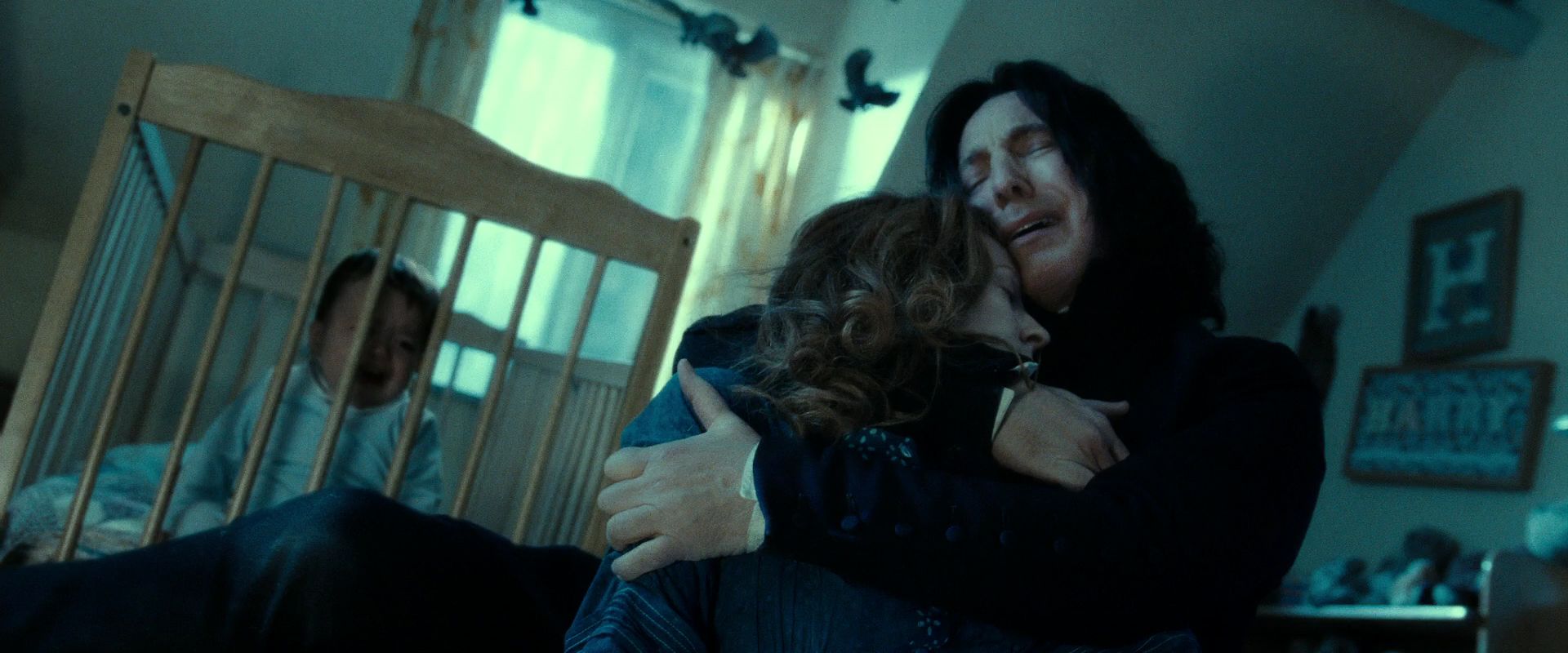
As if this scene wasn't enough to make me cry.
(End spoilers).

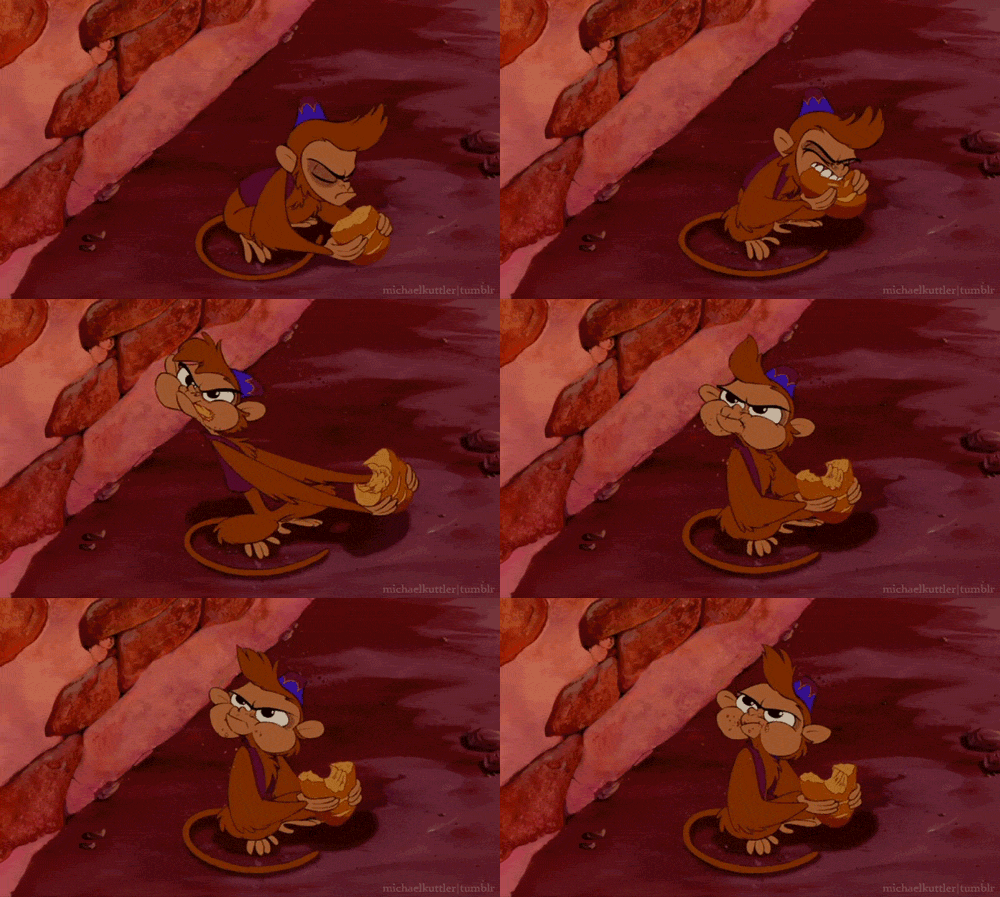
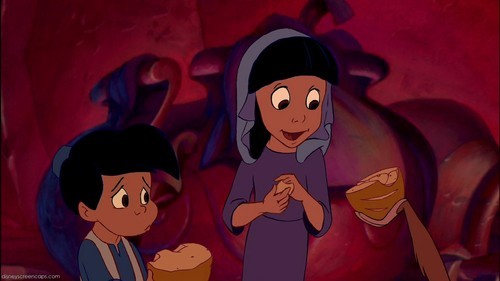
But small sacrifices made by characters impact us too. Aladdin in Disney's, well, Aladdin, makes us all love him after he gives up the bread he stole to two little hungry kids. Most of us had probably already liked Aladdin because of his recklessness and snarky singing. But when he gave the kids the bread, sacrificing his own meal, he did more than make us like him - he made us love him. Abu was the same - at first we were disappointed because it seemed he was going to be selfish and keep the bread to himself, but eventually he gave it up (although grudgingly). And then we loved Abu too.
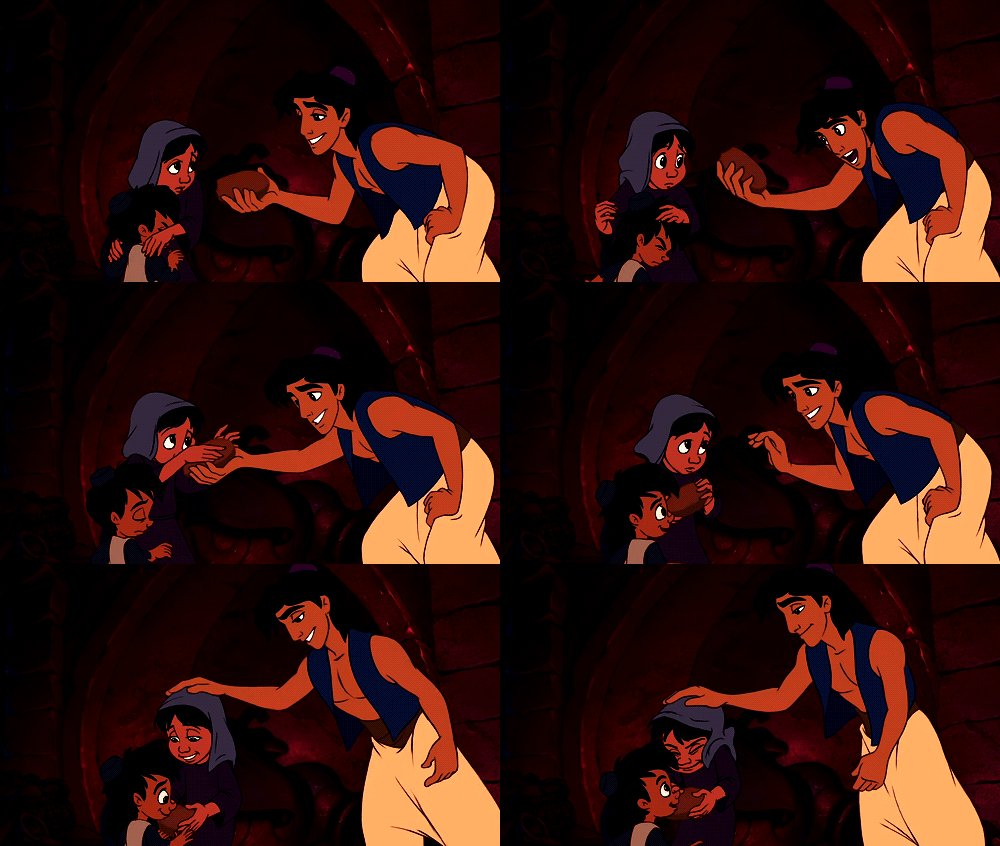
Because that scene was adorable.
The fact is, selflessness is one of the most admirable traits around. So even if a character is ill-tempered and moody, chances are we'll like him if he makes a few selfless sacrifices.

Now, of course, this post is actually inspired by Easter. This weekend I'm celebrating, along with millions? billions? of other Christians around the world, the ultimate sacrifice ever made. Jesus Christ gave his life for me and you and everyone else on this planet some two thousand years ago. But His sacrifice didn't only have meaning in that moment He died - it is still what saves us from our own sin and its consequences. His was the best sacrifice ever made!
And if you know the Gospel, then you know that His death wasn't the end of the story. He's alive, with his Father in heaven, telling God that we no longer have to die for our sin because He died in our place. Hallelujah, He is risen!
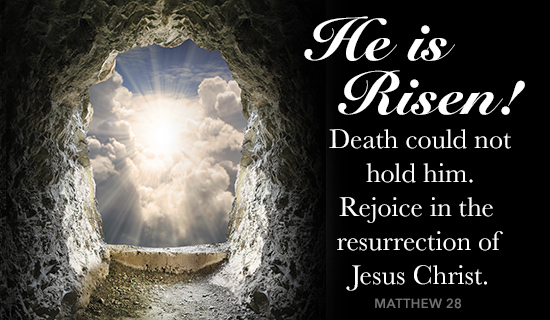
The full Gospel story can be read one of the Gospel books in the New Testament of the Bible: Matthew, Mark, Luke, or John.
Happy Easter!

Has anyone in your life every sacrificed something for you? How did it feel? Have you ever used sacrifice to make a character more likable? Are there any characters in your favorite books or movies who made sacrifices you found admirable? Are you celebrating Easter for the same reason I am? Tell me in the comments.
Tuesday, March 31, 2015

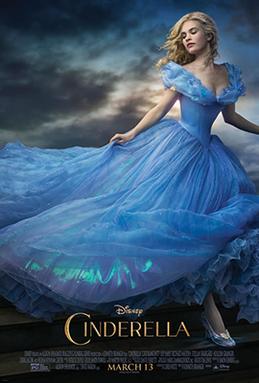
Why I Loved the New "Cinderella"

I'll admit: I loved the new Disney movie Cinderella.
Why? It certainly wasn't because I liked the first one. In fact, Cinderella has been one of my least favorite fairy tales up until now. Beauty and the Beast was probably my favorite, but this new movie has blown that out of the park. Why?
For starters, isn't every girl's dream to be loved and valued by a man? A good man who'd do anything for her? The prince chose to spend an entire party with Cinderella (a serving woman) instead of thousands of other beautiful women. Then he kept the shoe she left behind and spared no effort in using that shoe to find her again out of an entire kingdom full of people. Now tell me - don't you think Cinderella felt valued by him? Girls, wouldn't you love to feel that way? Well I know I would.
Of course, that is the basic story of Cinderella. Why did I like the newest version of it in particular so much? The answer isn't too surprising: it was the characters.
One of the primary complaints against some fairy tales is that the princess and prince are one-dimensional. No one likes one-dimensional characters. The new Cinderella managed to give both the prince (the only name I've got for him is Kit) and Cinderella herself actual characters. Cinderella was still the optimistic, dreamy, kind girl we know from the first Disney movie . . .
Please tell me I'm not the only one that was annoyed by her incessant cheeriness.
. . . but she was different in that she wasn't supernaturally cheerful. She didn't sing while she worked, she collapsed exhausted to go to sleep by the fire place after she was done working, she was hurt when the step mother and sisters left her out of something so basic as a meal.
In others words, she had more than one emotion. She didn't prance through her hard life singing to birds.
As for the prince, he had character because he existed outside of Cinderella's life. He was worried about his dying father, his father was pushing him to choose a princess for a bride, and he tried to keep the fact that he was a prince from Cinderella because he thought she'd treat him differently otherwise. He had a nickname. It made him more human, as opposed to a cutout picture of the perfect heroic prince we got in some of the older Disney fairy tale movies (Cinderella, Snow White and the Seven Dwarves, Sleeping Beauty, etc.).
Another thing to like about the new version is that, wonder of wonders, the prince didn't fall in love with Cinderella at the ball. They met beforehand, and yes - it was a little bit of instalove - but their relationship had a little bit more time to develop than it did in the original Disney movie. Their initial meeting is what motivated the prince to invite all the maidens in the kingdom to the ball, and motivated Cinderella to try to get there. It made the whole plot so much stronger.
A few other things that made the movie fantastic? Helena Bonham Carter as the hairy dogfather I mean fairy godmother . . .
. . .Cinderella's incredible ball gown . . .
I want to twirl around like that too.
. . . the animated mice . . .
 . . . and the fantastic job done on the costumes and the excellent acting from Cate Blanchett as the evil Lady Tremaine.
Just go see it. My dad even liked it, and if you're a girl and want to feel all gushy inside, this movie should just about do it. Take a fluffy blanket and a bar of chocolate to the movie theater. Fantasize that you're Cinderella. You'll love it. 

Have you seen the new Cinderella? What about the older ones? What do you like and dislike about each? Leave a comment!

Friday, March 27, 2015

Inspiration From the Battle of Gettysburg

You should know that I'm not a fan of reading nonfiction. I much prefer my fantasy worlds that keep reality away, thank you very much. But recently, I've had to research the Battle of Gettysburg for a school project, and that involves doing a little bit of nonfiction reading. For those of you who somehow haven't yet heard of Gettysburg (if you live outside of the U.S. it's excusable, but if you're in the U.S. and are out of grade school . . . you should be paying more attention in school), it was the bloodiest battle of the Civil War. A lot of heroes were discovered that day. Real heroes, not fictional ones.
A memorial to Maj. Gen. John Reynolds, who died at Gettysburg
You see, I've been reading several short biographies of officers that fought in the Battle of Gettysburg. A few of them are Daniel E. Sickles, Joshua L. Chamberlain, James E. Longstreet, Henry Heth, John Buford, Robert E. Lee, and George G. Meade. I thought I'd find this part of the project boring - I'd rather research the battle tactics. But it turns out I was wrong. I've enjoyed reading these short little biographies very much. Why? Because I found that they are stories, with real, interesting characters and plots worthy of novels.
Take James Longstreet, for example. While reading his biography, his "coolness under fire" was mentioned several times. Everything painted a picture of a cool, cautious, unflustered man who wasn't scared to tell Robert E. Lee when he thought that the battle plan was a little ill-advised. His reputation suffered because he was outspoken, and yet I think he sounded wise. Through his life he had three children die in rapid succession, his first wife died after the Civil War, and his relationship with Robert E. Lee degenerated after Gettysburg. The South hated him for supporting the Republican party and Ulysses S. Grant's campaign for President, and then for accepting a political office under Grant. But, Longstreet went to West Point with Grant. They were friends. What kind of emotional roller coaster must it have been for this man to endure all that? Warring against his friends, watching his family die, losing the trust of his home? And through all that he was still noted for being able to inspire the men under him. Heroic? I think so.
Another character I discovered was Daniel E. Sickles. This guy is single-handedly responsible for some of the bloodiest fighting during the Battle of Gettysburg because he moved his men out of line against orders. Yet the guy still got a Medal of Honor because of how well he fought and encouraged his men, even after losing a leg in the fighting. Oh yeah, plus he donated his amputated leg to a museum with a card that said, "with the compliments of Maj. Gen. D.E.S." And what do you know? The museum still has it on display (ew). So the guy had issues with authority but was still a brave man and a good leader. I got the impression that he was a sort of rogue. Imagine trying to write that kind of character realistically!
Maj. Gen. Daniel Sickles - I don't think he really LOOKS like a rogue . . .
My point here is that sometimes the best stories and characters are from real life. If you pay attention in history class, who knows? Maybe you'll find your next story inspiration, or that character you've been looking for. Nothing is better inspiration than real life.
And did you know that some Civil War soldiers reportedly found a pterodactyl? There's a photograph. Beat that for story inspiration.

Where have you gotten real-life inspiration from?