Showing posts with label Protagonist. Show all posts

Tuesday, July 28, 2015

The Chosen One Cliche - When SHOULD It Be Used?

Harry Potter, Harry Potter. Anakin Skywalker, Star Wars. Tris Prior, Divergent. Katniss Everdeen, The Hunger Games. Eragon, The Inheritance Cycle. The Pevensies, The Chronicles of Narnia. Every Protagonist Ever, Warrior Cats. All these main characters share something: each is somehow the only one in the entire world who can solve the war/galaxy/society/government, despite being a pretty average Joe. Oftentimes they are special because of a prophecy, but there are occasionally other reasons. But the underlying concept is always the same: this (sometimes only seemingly) average protagonist is the only one who can fix the overarching plot problem. Commonly, this gets called "the chosen one" cliche, and it can either go over really well or really, really badly.

Hahahaaaaa . . . not in Star Wars. But more on that later.

Many people get annoyed with this particular cliche. After all, why is that girl/boy, out of millions, the one who is special? Why couldn't anyone else just step in and beat up the big baddies, whoever they may be? Sometimes, these people are voicing valid questions - why couldn't someone else have been the "chosen one"? But other times, when the story is well done, there is a legitimate reason for the "chosen one" cliche. It all depends on the individual story.
Take Harry Potter (SPOILERS for The Order of the Phoenix and onwards ahead). In this series' case, the cliche was well used. Harry was "the chosen one" because of a prophecy which clearly was talking about him - but there was actually more to it that that. Harry really was the only one who could have finished off Voldemort, because: (1) he was the only parselmouth apart from Voldemort, thereby allowing him to stop Voldemort's return in book 2 and claim the sword of Gryffindor, (2) he was the only one able to sense the horcruxes and therefore find them, (3) he had the sword of Gryffindor because of point 1, which allowed him to actually destroy the horcruxes once he found them, (4) he had to die in order for Voldemort to be kill-able (although, why Voldemort had to do it himself I've never understood), and (5) he was the only one Voldemort couldn't kill in one shot. So, in the Harry Potter series's case, there were reasons apart from "because this prophecy said so" that Harry was "the chosen one." (SPOILER END.) Because of that, the use of the cliche worked and no one complained.
Basically Harry Potter.
Now, let's look at Star Wars (minor SPOILERS for Episodes I-III ahead). Anakin Skywalker is "the chosen one" in this case, as we are told in Episode I (a real disappointment of a movie, actually). We are told via the Jedi that the Chosen One is prophesied to bring balance to the force. Yes, another one of those pesky prophecies (maybe that's another cliche to talk about later?) - they always seem to be messing up people's lives, don't they? Any-hoo, while I adore Anakin and the ability of his character arc to make me cry, the whole "chosen one" thing was really quite unnecessary in my opinion, and therefore is just an annoying cliche instead of an actual plot device. Why? Well, in Episode I (bleagh) Qui-Gon Jin discovers Anakin's super-high midichlorian count, which makes him think Anakin is the Chosen One, thereby getting Qui-Gon to break a whole load of Jedi tradition to make Anakin a part of the Jedi Order. Because of Anakin's midichlorian count, we'd expect him to be really powerful in the force - like, maybe moving starships, or something. However, as far as powers go, Anakin seems to be just like every other Jedi.
So much for special.
Here is where the problems start. If we'd seen evidence that the prophecy meant something, and that Anakin truly was special because he was super-powerful, then we would have had evidence that Anakin was worthy of being "the chosen one," subject of a prophecy. As it is, the prophecy is expected to create its own importance . . . which in my opinion, wasn't very successfully done.  Next comes problem two: because Anakin doesn't appear to be special, the prophecy doesn't seem to play any part in the entire rest of the series, and "the chosen one" thing isn't really mentioned after Episode I, the only reason for the entire "chosen one + prophecy" set-up in the first place was to get Anakin inducted into the Jedi Order. Which is a really bad excuse to use a cliche, especially if you aren't going to back up "the chosen one's" chosen-ness with actual tangible evidence or utilize the prophecy and/or chosen one thing much at all in the rest of the movies. (SPOILER END.)
Except for that one time when Obi seemed to remember it.
It didn't stop me from crying over Episode III, but still. Poorly done, Lucas. The prequel trilogy would have been much better if Anakin had been unusually powerful. And look, most Star Wars fans don't even like the prequel trilogy, or at least Episodes I-II. I wonder why.
That was a mistake no fan would have made.
Another poorly done "chosen one" cliche was in Divergent. Tris is never named a "chosen one," per se. However, she is supposedly special (SPOILERS ahead) because she is Divergent. However, she wasn't the only Divergent! There were hundreds of them. Roth's main problem with this was how she set up her world. How had so many Divergents gone under the radar if they were being hunted? Why is the majority of the population so limited in admirable traits? Why was Tris the only Divergent who took action? (SPOILERS end.) All these questions caused the idea of Tris's special-ness to fade, and had readers doing a little bit of head-scratching.

So, don't use "the chosen one" cliche unless:
  1. You'll use it as a plot device more than once.
  2. There is a reason apart from prophecy that this character deserves to be labeled special.
  3. The character takes actions or possesses abilities no one else can manage.
  4. There is literally no one else in society who also shares the character's specialness.
The Chosen One can be done really well and used to create a really fantastic story (look at the sheer success of Harry Potter!), but you need to make sure you're not just using it as an easy excuse to propel the plot forward or as a cheap way to set your protagonist apart from others.

What do you think? Do you agree with my assessments of Harry Potter, Star Wars, and Divergent? Do you think that this cliche shouldn't be used at all, ever? If you don't, when do YOU think it SHOULD be used? I'm interested in what your guys' opinions on this are, guys!

Want more posts on cliches and how to put a twist on them? Click here for all my posts on cliches, or click the label in the sidebar.

Tuesday, July 7, 2015

The Orphan Protagonist Cliche - Why Is It Still Used?

Have you ever noticed that, in a lot of children's and YA fantasy/adventure/action/sci-fi novels, the main character is an orphan? This is so common that the orphan main character has become cliche. Maybe you're sick of it and really wish a biological parent would show up every now and then. However . . . have you ever considered why the orphan MC is so common?

Photo not mine - found over here. I don't know who to credit.

Think about it. All children's and YA protagonists are the same ages as their target audiences - under aged. They're not adults yet, and that means that they are subject to a legal authority. Parents. What do you think most parents' reactions to their teenager/child going off on a probably dangerous adventure would be?
This sounds quite callous, but one of the easiest and most convenient ways to get rid of that authority which would otherwise prevent the children/teen MCs from going on their perilous adventures is to kill the parents before the book even starts. This leaves the main character in one of three positions: (1) he's on the streets, free to do whatever he wants including running into characters involved in the adventure (Mistborn trilogy); (2) he's in an orphan home which obviously will be very careless and not bother to go looking for the MC once he's gone, or will send him away with a man of dubious motives who will inevitably get the MC involved in the adventure in the first place (hello The Ascendance Trilogy and The Ranger's Apprentice); or living with his last remaining distant relatives who either don't care enough about him to bother if he dies -
- or will soon die to provide the MC with a motive for his quest and conveniently free him of remaining parental authority at the same time.
Obviously, this whole removal of authority thing is getting somewhat predictable. But, then again, I suppose that is sort of the point of cliches.
Now the question is, what to do about it? If we leave the parents in the story, we're still going to have that irritating parental protectiveness to deal with, which means we won't be able to really torture the MC as much as we need to. 
Or does it? Here are ten ideas of ways to avoid the orphan protagonist cliche.
  1. Make the parent(s) part of the adventure. Mother gets kidnapped and the child has to set out on a quest to save her (Michael Vey). The dad is an adrenaline junkie and wouldn't pass up the excitement for anything. The mother goes along to try to mother-hen the protagonist on his journey, but believes in good enough to let her child be brave. 
    Sorry. I couldn't resist throwing that in.
  2. The parent(s) are absent so much that it is easy for the protagonist to run away/get taken away and have some time before anyone notices he's gone. A more extreme version of this happened in Nobody by Jennifer Lynn Barnes, when the female protagonist was actually incapable of being remembered by her parents after she'd left.
  3. The parent(s) are part of the adventure before the protagonist is, on either the side of good or evil (Elemental trilogy by Antony John, The Compound by S.A. Bodeen). 
  4. The protagonist is abducted away from his parents and forced into his adventure (Legend trilogy by Marie Lu, The School of Good and Evil by Soman Chainani, Girl, Stolen by April Henry).
  5. The protagonist has no idea who his parents are or if they're alive (this is beginning to be used more often, so be wary). Maybe he is reunited with one or both of them at some point in the plot, complicating things.
  6. The adventures happen at a boarding school or summer camp which the parents/parental figures sent the child to (Percy Jackson and Harry Potter, anyone?). 
  7. The law interferes with parental authority over the children - this happened in the Black City trilogy by Elizabeth Richards because of Ash's half Darkling status. His father couldn't control all the events in Ash's life because the government was running control measures on Darklings. Other examples of lawful interference take place in Divergent, The Hunger Games, Uninvited, Half Bad, The Darkest Minds, and plenty of other dystopic novels.
  8. The parent/s (long shot if there are two parents) are mentally ill, and due to extenuating circumstances (like the end of the world and psychoactive medications) can't take authority over their child. Take a look at the Penryn and the End of Days trilogy by Susan Ee to see this very unique set up. 
  9. The adventure does not require any long-distance travel, and so the MC manages to have his adventure right under his parents' noses. (V is for Villain by Peter Moore, Slated trilogy by Teri Terry).
  10. The age of majority (legal adulthood) is younger than it is in this world, so that the MC that we would consider a teen or child is actually considered an adult (Red Rising trilogy by Pierce Brown)
There are a few ways to spice things up, but sometimes . . . there is no other option. Your plot requires the parents to be dead, and there's no way around it. Don't be scared that you're being cliche, if this is the case. Just make sure you didn't automatically make the MC an orphan because that was the first idea that came into your head. Think about other options. Family is a big deal, and sometimes, it is nice to see some familial relationships in a book. 
Or maybe you have to do the opposite. You've got the parents, but they're proving pesky. In that case:
Kill those darlings.

So what about you? Do you agree that the orphan protagonist is getting cliche? Have you ever used it, or one of the twists I listed? 

Want more posts on cliches and how to put a twist on them? Click here for all my posts on cliches, or click the label in the sidebar.

Tuesday, May 26, 2015

The Difference Between Heroes and Protagonists

This is a sequel to the post "The Difference Between Villains and Antagonists." If you haven't read it yet, please go check it out.
Last week we went over the typical baddies, villains and antagonists. Now we'll turn our attention to the light side and go over the difference between a hero and a protagonist.
I give you Tom Hiddleston as a king. You're welcome. (Image not mine.)
Classic heroes aren't very popular nowadays. They were used more often in mythology and legend, but the difference is still important to know since the term is still widely (and often incorrectly) used.
As before, let's start with some Google dictionary definitions of the terms:

The definition for "heroine" is exactly the same except gender-swapped.
Allow me to direct attention to those wonderfully highlighted phrases (said wonderful highlighting added by me in Paint). Protagonists are characterized by playing a lead role in the plot. Heroes (and heroines), on the other hand, are defined by their good and noble qualities and achievements.  Was there a hint of "lead character" in there? Nope. Was there a hint of "noble quality" in the definition of protagonists? Nope. Clearly, "protagonist" refers to a simple plot role, while "hero" refers to a character with certain attributes.
As with antagonists and villains, protagonists and heroes are often one and the same. Some characters who fit both descriptions are people like Hercules of legend and the Disney movie, Superman from the comics and various movies, Aeneas of the Aeneid, Gilgamesh from the Epic of Gilgamesh, Harry Potter from the Harry Potter series, the Prince in Sleeping Beauty, Percy Jackson from the Percy Jackson books, Robin Hood from just about any of the movies, books, and legends; and plenty others. Heroes have grown more flawed as literature has progressed, but they used to be highly idealized in myth and legend - the ancient Greeks loved their demigod heroes. Still, they typically have moral compasses pointed directly north - there's nothing skewed about their motives (which sets them apart from anti-heroes). 
However, these two words do have unrelated definitions, which means they cannot both always be applied to the same character. There are protagonists who are not heroes, and heroes who are not protagonists. 
A few protagonists who I don't think of as classic heroes include Jack Sparrow from The Pirates of the Caribbean movie series,  Neal Caffrey from White Collar,  Yarvi from Half a King, Finn from the Incarceron series, Darrow from the Red Rising trilogy, Sherlock from the BBC Sherlock series, and Sophie from The School of Good and Evil. A lot of these guys are anti-heroes, but every now and then a villain takes the role of protagonist. You'll notice that a lot of these protagonists have a more "the end justifies the means" mindset. They're not as pearly-white morally as a classic hero. Some of them would be downright unlikeable except for whatever little lovable quirk the writer gave them (haven't we all hated Sherlock at one point or another for how insensitive he is?).
*strangles Sherlock through the screen*
Heroes who aren't protagonists include Doctor John Watson from the BBC series Sherlock, Horace (for the majority) of The Ranger's Apprentice series, Luke from The Darkest Minds series, Neville Longbottom from Harry Potter, Obi-wan Kenobi from the original Star Wars movies, Henry from The Chronicles of Vladimir Todd, and possibly Grover from the Percy Jackson series. If they're not protagonists, heroes seem to pop up most often in a role which allows them to be very close to the protagonist. Reason? They're there to help guide the protagonist along paths of righteousness. This means quite a few mentors and sidekicks are typical heroes, with straight-laced morals and a clear idea of what's really going on in the conflicts. (Note: Especially if your protagonist is an anti-hero, you may want to make a supporting character a classic hero to provide contrast and conflict, and to help make the protagonist make decisions readers can vouch for. Red Rising had an anti-hero protagonist and no character with a straight moral compass to help guide the main character, and it left me feeling like I couldn't really fully vouch for any of the characters.)
It ends up like that.
So to recap, a protagonist is:
  • a lead/main character
  • just a plot role, saying nothing about the actual characteristics of the character
And a hero is:
  • any character in the story with . . .
  • noble qualities, outstanding achievements, and a working moral compass
Ah, I love definitions and clear distinctions. Makes things so neat and organized.
Next Tuesday I'll post something about anti-heroes and anti-villains, which are the grey areas I haven't really spoken of yet. Should be exciting. *rubs hands together eagerly* As a further note, this week's posts are scheduled because I'm away, so I won't be around to answer comments until the weekend.

So tell me your opinions. Who are your favorite classic heroes? Do you think that the classic hero is sort of out-of-style right now? What about non-hero protagonists? Who are some of your favorites and why? Did you hate Sherlock at least once too? Have you read a book without a single morally straight character, and did it bother you? 

Tuesday, February 3, 2015

Character Interview: Ace Harrod

Nearly two weeks ago I opened up Ace Harrod for questions, which he promised to answer in an interview. And now, I deliver to you the results of your relentless questioning. (Thanks for all the questions, by the way - there are a lot of good ones and this thing is way longer than I expected it to be.)
So now, here he is! *whispers* I apologize for his arrogance. He's knocked down a few pegs later on in the book, but don't tell him that.
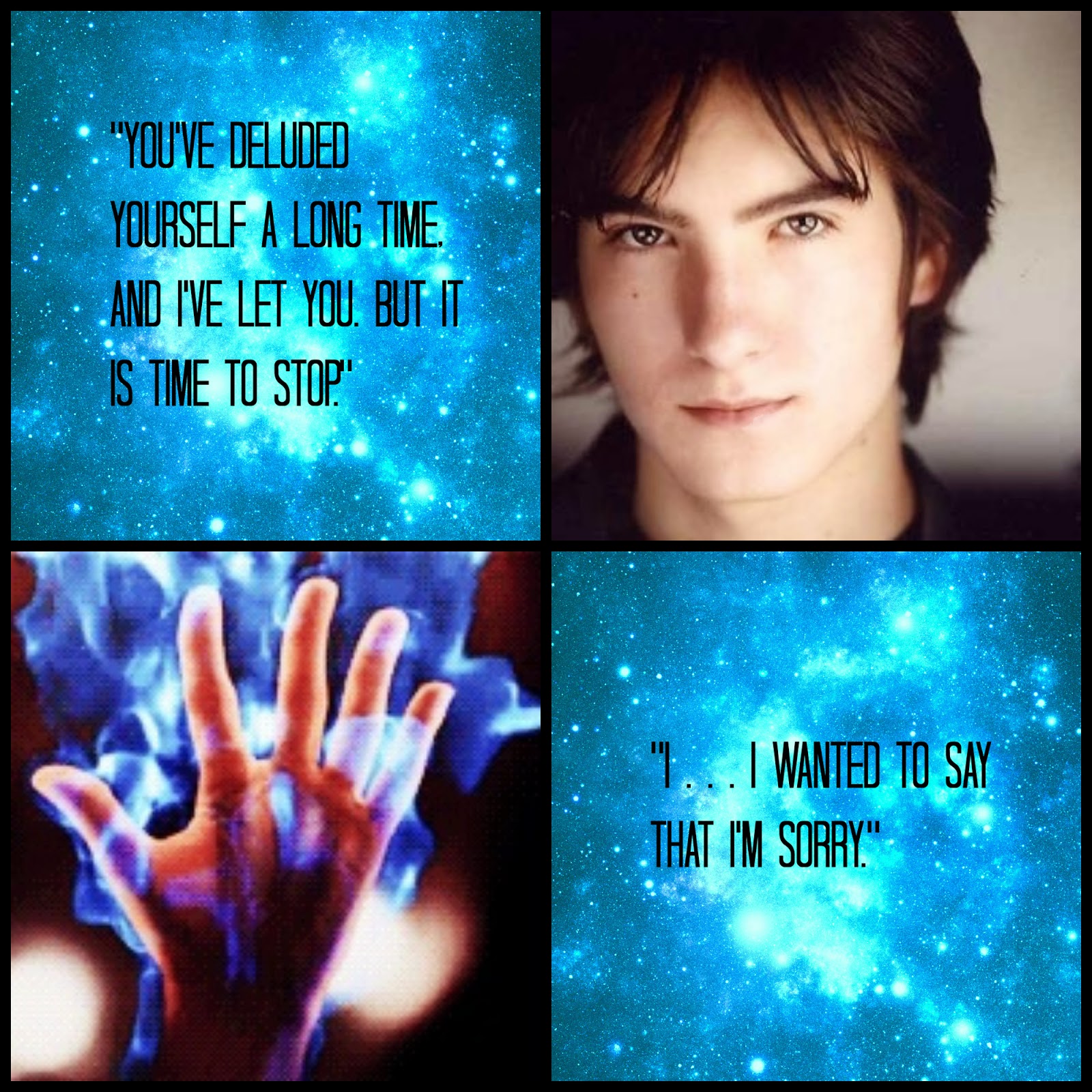

Quotes belong to A. Smith, from Shadows & Light. Images found on Pinterest. 

Hey Ace, let's get started. Do you ignore your twin because of a personality clash? Or is there something deeper?
I don't think it's so much a personality clash as it is a Destiny clash. My life is going to go in one direction, in which I will be awesome, and hers is going in another direction . . . in which she will not be awesome. Heroes and villains can't really get along, can they? It's like a law of nature.

Do you hold the fact that you're the elder twin over Mara?
I haven't really thought about it before. I mean, I'm only older by a few minutes. But I feel older because I'm obviously a lot more mature than she is, and I'm dealing with more responsibility than she could probably handle. So yeah, I take pride in that. I don't really talk to her much, though, so I don't think I hold it over her. Why are we talking about Mara anyway? I thought this interview was about me?

Alright, alright. Different kind of question. Do you enjoy your popularity?
Well who wouldn't? Of course I do! I can hang out with whoever I want, date whoever I want . . . ehem, not that I'm not happy with Victoire of course. If you're reading this, baby, I love you!

Ugh. Do you think you'd have the same friends if your Destiny was different?
*shrugs* Probably. I know that a lot of my friends hang out with me because I'm awesome, and I'm awesome because of my Destiny of being a life-saver. Who wouldn't want to be friends with me? That said, my really good friends aren't just cronies. I don't know if they would have started hanging out with me if it wasn't for my Destiny, though. I would have just been another face in the crowd to them.

How did you meet your French girlfriend? What is she like?
Oh, Victoire . . .she and I were accepted as Mage League cadets at the same time and went to training together. We first started talking when we were partnered up for a unarmed combat class. I'm pretty sure I still have a bruise from where she kicked me . . . but yeah, Victoire is great. She knows what's what, you know what I mean? She's got convictions. And she's smart and witty and kind and beautiful and. . .and perfect.

You're such a romantic. How important is your family to you?
It depends which family member you're talking about. *laughs* Yeah, I'm close to Mom and to a few of my cousins, but I hardly ever see dad and Mara . . . well, she's Mara. But I make breakfast in bed for Mom sometimes, and I hang out with my cousins whenever they're around. And I like Dad. He's sort of quiet but he gives good advice, even if I don't ask for it. So yeah. Pretty important, I guess.

What kind of piano music do you play?
How did they know about that?! *looks at author accusingly* You told them? Why?
Just answer the question. We can argue later.
I'm not happy about this. But since you must know, I play classical. Beethoven is my favorite.

What's your favorite thing to do? 
Hang out with my friends, use magic, play piano (*glare*), draw, take Victoire out to dinner . . . that's a big one. Do I have to choose one?

Nope, I get it. You're a indecisive kind of person. Morally, are you a black and white guy or a shades of gray guy?
Pretty black and white, I guess. I mean, you either follow the law or you don't. If you don't, you're a criminal, and if you do, you're fine. It's pretty simple, isn't it?

And what's your view on mercy versus justice?
Mercy is good I guess, as long as by being merciful you aren't being stupid. Like, don't let a murderer go just to be merciful! He'll hurt other people. Most of the time I think justice is better. It exists for a reason, you know?

What is it you're being trained for?
Mage League, you mean? Well right now I'm an Apprentice, which means I've been approved to study to become a Mage. Mages are magicians that lead teams of non-magicals on missions to arrest Sorcerers. Or Sorceresses, I suppose.
Maybe you can explain the difference between Mages and Sorcerers?
Mages are government trained and approved magicians. We use magic legally to deal with illegal magicians, sorcerers or sorceresses, depending on the gender. Sorcerers are not cleared to learn and use magic by the government, and they're often criminals for other reasons too - magical assault and murder are often on their crime list. Essentially the Mage League is like an elite police force that deals exclusively with magical criminals.

Do you kill people, and are you trained to kill?
I have never had to kill anyone, no. Because I'm in the Mage League though I do know how to kill . . . but I really don't ever want to have that on my conscience. On missions, killing is always a last resort and it will only ever be ordered in order to save the lives of the good guys. I hope I never get into that kind of situation.

Yeah, let's hope. Does your girlfriend know what you do?
Of course, she's right behind me in training! I even help her with her homework, since I went through cadet training a little faster and got ahead.

What's your favorite weapon?
Magic. I'm training with a handgun too, but it doesn't have nearly the same range of effects that magic does. And it isn't nearly as cool.

Who is your role model? And it can't be yourself.
Aw, you're serious? No, I'm kidding. It's my Mage mentor, Paul. He's awesome. Never failed a mission and has the lowest casualty rate of any Mage team in the county. Plus he runs his team well. I also look up to the director of my local Mage League Outpost, Director Delaney. He knows how to get things done, and done right. (He also happens to be Victoire's dad, so I kinda have to like him. But that has nothing to do with it. At all.)

You'd better hope you stay in his good graces. What's your view on life? 
What does that even mean?
I don't know. Your motto, or life's purpose, or what is most important or something.
Who asked this question? I'd like clarification.
*shrugs* A philosopher? Question-askers' identities are classified, I'm afraid.
*sigh* Alright, well I guess my view on life's purpose is to do something meaningful with it. Save lives or make a scientific breakthrough or something. Don't waste the time you've got because there's that saying thingy . . .life is short. That answer the question?

I think so, but here's another philosophical question: What's your view on power?
Good in the hands of the good guys, bad in the hands of the bad guys.
That's sort of a no-brainer, isn't it? Maybe want to expand a bit? 
Well it should be given to people who will use it right.
May I say that you should be president? You're so profound.
Yeah. Very funny. I would try to come up with a comeback, but that's Victoire's thing and I don't want to be embarrassed any further. Can we move on?

Well I guess you're not going to come up with anything better, so sure. Here's one you'll like. What are your special abilities and talents?
I nearly broke the record for completing Cadet training to get into Apprentice training, so I'm a sort of prodigy when it comes to magic. My mentor says I'm going through my Apprenticeship at double-time, too! So yeah. There's that small thing. I get good grades, too, though that isn't as impressive.

And now on the opposite side of the spectrum, what are your strengths and weaknesses?
As I said I'm a talented magician. And I'm pretty good with people. Weaknesses? Ummm . . .
You've got to be able to think of something.
I stink at strategy games?
I think this means a serious weaknesses. Because I know what they are . . .whether you do is another question.
Well I only barely passed science and strategy. All those lost games of Risk didn't really fulfill the expectation of "practice makes perfect."

I guess that will have to do. I can't very well tell you (sorry people). Next one. Do you have a secret?
Well my piano playing was a secret. Now, obviously, it isn't, thanks to my author. *glares*
Any others?
No. I have this tendency of blurting things out that I've been thinking about too much. I reach my internal thought limit, you know? So anything I try to keep secret usually doesn't stay a secret for very long. My piano playing was the one thing I'd managed. Thanks for ruining that.

I'm not sorry. Anyway, that's the last of the submitted questions. However, I have a bonus question for you. *rubs hands together gleefully*
*nervous* Yeah?
Yeah. Here it is: what would you do with yourself if your Destiny changed?
But Destinies don't change. That's sort of the point.
Just say it did. What would you do?
I . . .I don't know. And it doesn't matter anyway, because Destinies don't change. No danger of that. *smirks* So is that it?

Yes, that's the end. I think your answer was sufficient for my purposes.
*gulps* I'll see you all later. I'm going to leave now before she thinks of something cruel.
I can do that whether you're around or not. But go ahead. I'm sure everyone got to know you pretty well.
Good. I'm sure it was the highlight of everyone's week! *grins* Bye!

He really meant that seriously, didn't he? I'm glad he's gone, I was reaching my Ace limit. His arrogance is so irritating. I like him so much better at the end of the book. *sigh* He's a good person, under the over-confidence and the bigotry. He's got a long way to go . . .
Anyway, I hope you all enjoyed that. I know Ace did. *rolls eyes* Anyone else have irritating characters? 

Wednesday, January 21, 2015

Now Taking Questions for Ace Harrod

So I looked at the date today and realized I missed the day for posting . . .again. It's getting terrible, really, but at least I caught myself a day after this time instead of three weeks. Anyway, I was wracking my brain trying to think of a quick topic for today's post. And I thought, "why not do another character interview?"
So here we are. I've chosen Ace Harrod for the honor, since I'm working on outlining his point of view for Shadows and Light currently and I need to work on building his character up a little more.

Quotes from Shadows & Light by A. Smith
Ace's real name is Julian. He prefers Ace, his middle name, because it "sounds cooler." That part of his name also has some history to it, but that isn't important. He is the (elder) twin brother of Mara, who you may remember from the Beautiful Books linkup series I did, but he tries to ignore the fact that they are related. They're both eighteen.
Ace is a star student in the Mage League and is progressing through training astoundingly quickly. He loves working for the Mage League and dreams about his star-studding heroic future, which he feels is guaranteed because of his Destiny. What is his Destiny, precisely? Basically, it says he'll save lives. He fancies himself Superman, honestly.
Ace has a secret love of playing the piano. Very secret, since the only one who knows he even plays is Mara and she hasn't let on that she knows. He doesn't want people to think he's sentimental or musical because he doesn't think it fits with the "confident" and "heroic" personality he cultivates at school. As a side note, he's very popular and has a French girlfriend.
His MBTI (for those who know what that is) is ESFJ/P.

So yes, ask away. I'm thinking I'll give it two weeks before I post the interview, to give enough time for asking. I need to figure out a few details on this guy, so any questions you can come up with - even if they're really simple - please, ask them.

Wednesday, October 8, 2014

Character Cast of Taken

I thought I'd introduce you all to the main characters of my main project right now. For now, it is called Taken, and I'm in the editing stages of it.

The protagonist's name is Tyv (actually a Danish word for thief). As the name implies, he's a fifteen-year-old thief living in a bankrupt country. His usual facial expression is a scowl, and for the most part he only cares about himself - the exceptions being Nitri and Ambyr, who are below. Deep down he struggles with the idea that he was abandoned as a baby, but not even he realizes that it bothers him.  He's very realistic, verging on the point of pessimistic, and is skeptical of just about everything and everyone. Once he gives his trust though, he's loyal to a fault. And contrary to what is expected from a thief, he keeps his word once it is given. The whole plot of Taken only happens because of Tyv's loyalty to Ambyr and the promise he'd given her. Without his loyalty to that promise I'd have no plot!
My drawing of Tyv
(excuse the lack of face - I hate drawing small faces).

Next up is Nitri (I'll be honest and admit he's my favorite baby). He's Tyv's best friend, though a few years older and a bit scarier. While Tyv is all grim and scowl-y, Nitri is laid-back and grins a lot. So why is he scarier? There's a chance he's slightly insane. I'm really not sure if he is - all I know is that he mimics a child's hide-and-go-seek "I'm gonna find you!" tone while he's threatening death on his enemies, and he enjoys scaring the wits out of the other people living in the slums. He is also a lot more heartless than Tyv is. He rules over the other thieves by terrifying them into giving up portions of whatever they steal. He takes way more risks than Tyv is comfortable with and seemingly has no care for his own life. It all stems from his silent struggle with a past tragedy, which he refuses to reveal to anyone.
He's unilaterally deaf, so he relies on Tyv for hearing approaching danger when they're surrounded by a lot of noise. He also has the disconcerting habit of tossing his knives in the air and catching them, without looking. One day he's going to seriously hurt himself, I'm sure. He's ridiculously vain as well, and refuses to take off the black coat he stole from a ship's captain.
My drawing of Nitri

The last important "good" character is Ambyr. She is the only female character in the entire book, and I did try to find way to bring more girls into it, but in a book set in a medieval style army, there aren't many chances for girls to be around. Ambyr herself is only around in the first quarter and then last chapter of Taken, but her influence on Tyv keeps her in mind through the whole thing.
Ambyr is the only truly "good" person in my main cast. She has a set moral code, is selfless and charitable, and dreams of one day leaving her hometown and setting up a wonderful life somewhere, a life in which she won't have to collaborate with thieves and live in the slums. She's fifteen like Tyv, and like Tyv, is an orphan - though she actually knew her parents. She trades items Tyv and Nitri steal with respectable shop keepers and merchants to lessen the chance of Nitri or Tyv being recognized. She refuses to steal anything herself, however, something that earns her derision from Nitri. One of Ambyr's chief goals is to get Tyv (and Nitri, though she doesn't care for him as much) to set up a respectable life instead of subsisting on thievery. She wants to inspire Tyv to be a better person.
My drawing of Ambyr

The last character I'll go over is my antagonist: High General Keir Durjaya. Think of Khan from Star Trek: Into Darkness and you've got a fair idea of his general bearing and appearance (it wasn't until I was well into the writing process that I realized I was imagining Keir as Benedict Cumberbatch - go figure). Keir was so injured by the death of his wife that he resolved never to get emotional again. Because of this he never hints at having emotion at all, and presents a frightening picture to anyone who is in his way. He does have a deep love for his son and for his country, but to anyone else he is callous. His method of waging war is brutal, and he uses any means at his disposal to ensure that he'll win a battle before it is even started. Keir isn't the antagonist because he's a villain, though. He's the antagonist simply because his extreme patriotism and desire to wreak vengeance for his country conflict with Tyv's goal of ending the invasion which my plot revolves around.
Benedict Cumberbatch - Keir Durjaya
So, that's it! It took me ages to develop these characters - most of them started out being about as interesting as cardboard, and it was a challenge to make them each unique from each other. I proved it to myself by giving the characters the Myers-Briggs test (I'll blog about that later)!
My favorite is Nitri because of his fun-loving nature and his tragic past. Who's your favorite character from your writing and why?